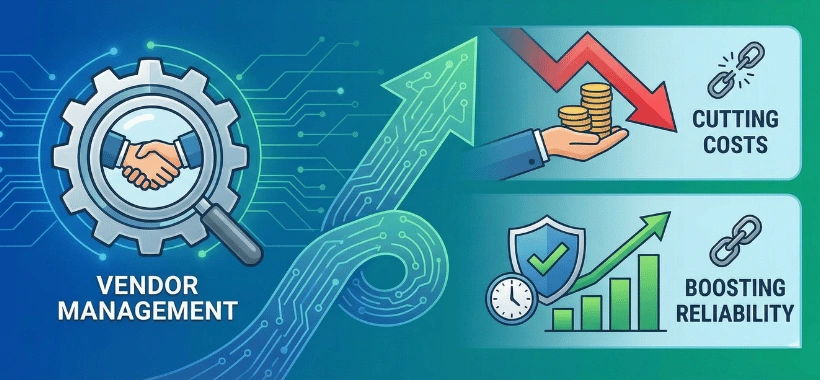
Improving vendor management helps cut costs and boost reliability by setting clear expectations, tracking performance, and maintaining strong communication. Strategic partnerships reduce delays, prevent errors, and ensure consistent, predictable supply chain operations.
In today’s complex supply chains, vendors play a critical role in operational success. Whether you manage a global network or a regional operation, strong vendor management is no longer optional, it’s a strategic necessity. Vendor management consulting helps organizations bring structure, visibility, and accountability to vendor relationships, ultimately reducing risk while improving performance.
1. Streamlined Vendor Selection
Choosing the right vendors sets the foundation for long-term success. Vendor management consulting introduces standardized evaluation criteria that go beyond cost alone: factoring in reliability, compliance, scalability, and risk exposure. This ensures organizations partner with vendors that align with operational goals and growth plans, rather than reacting to short-term needs.
2. Improved Contract Management
Contracts are more than paperwork, they define expectations, responsibilities, and performance standards. Consulting support helps organizations centralize contracts, clarify service-level agreements (SLAs), and establish clear escalation paths. This reduces misunderstandings, strengthens accountability, and minimizes costly disputes over scope, pricing, or performance.
3. Performance Tracking & Analytics
Without data, vendor performance is difficult to measure and improve. Vendor management consulting helps organizations define key performance indicators (KPIs) such as on-time delivery, quality metrics, cost variance, and responsiveness. Regular performance reviews supported by data allow leaders to identify gaps early and make informed decisions before small issues become major disruptions.
4. Consolidation of Vendors
Managing too many vendors can increase complexity and risk. Strategic vendor consolidation, guided by consulting insights, helps organizations reduce redundancy, negotiate better terms, and simplify oversight. Fewer, stronger vendor relationships often lead to improved service quality and cost efficiencies across the supply chain.
5. Stronger Vendor Relationships
Transparency and communication are essential for long-term value. Vendor management consulting promotes structured communication frameworks, regular check-ins, and shared performance goals. This collaborative approach builds trust, encourages innovation, and transforms vendors from transactional suppliers into strategic partners.
6. Risk Management Frameworks
Vendor-related risks such as compliance failures, service disruptions, or financial instability can directly impact operations. Consulting frameworks help organizations proactively assess vendor risk, ensure regulatory compliance, and implement contingency plans that protect business continuity.
7. Technology & Automation
Modern vendor management relies on the right tools. Consulting guidance helps organizations implement systems that centralize vendor data, automate tracking, and improve visibility across operations. Technology enables scalability, consistency, and smarter decision-making regardless of company size.
Conclusion
Vendor management consulting provides the structure and insight organizations need to control costs, strengthen relationships, and reduce operational risk. With the right strategy in place, vendor management becomes a driver of reliability, resilience, and long term growth.
Interested in strengthening your vendor strategy? A thoughtful review of your current approach may reveal opportunities for improvement heading into the next business cycle.